
So, what is branding anyway?
The importance of branding can’t be underestimated, but to properly understand why that is and apply it to your business, we need to strip it back to basics.
Let’s take a close look at what branding actually is (you guessed it, it’s much more than just your logo), the elements that make it up, and how you can nail your company’s branding and start to reap the rewards.
When you think about the concept of a brand, the first thing that pops into your head is probably a logo. And while it’s true that a logo is central to any brand, there’s so, so much more to it than that.
Your brand is how you’re perceived. It’s the way your audience feels about your business, and should be your guiding light whenever you’re making decisions. Branding is everything, big and small, you do to shape that brand, from the colors you use to the customer service you provide.
Marty Neumeier sums up the concept of a brand well:
“A brand is a result. It’s a customer’s gut feeling about a product, service, or a company. It’s not what you say it is, it’s what they say it is. A brand is your reputation.”
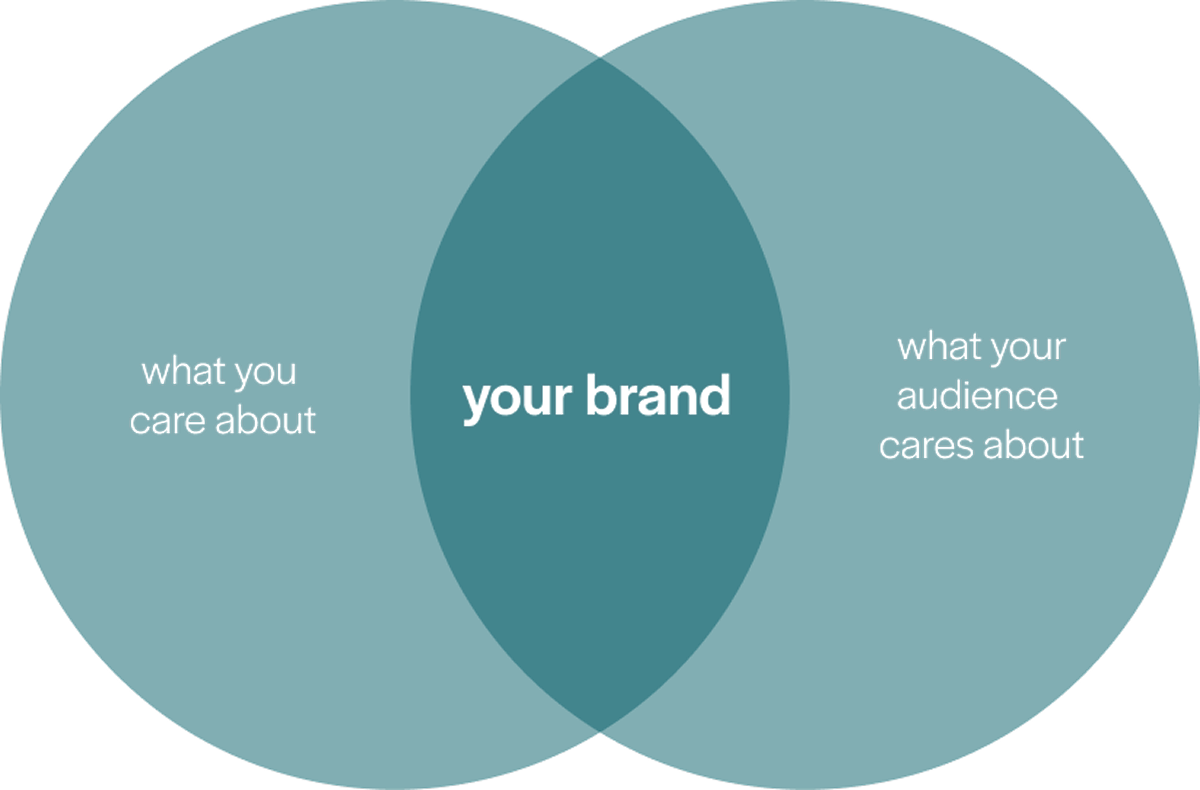
It can be useful to think of your brand as the point at which the things you care about and the things your audience cares about intersect and overlap. That common ground is the space on which you can lay the foundations of a strong, memorable brand.
hmmm, can you give me an example of what branding is?
This concept can be difficult to get your head around, so here’s an example you’ll be familiar with.
Think of Nike. Have you got the world-famous Swoosh in your mind’s eye? Maybe you’re already saying “Just Do It” to yourself.
There’s no denying that the logo and trademark are a huge part of the brand, and people all over the world would immediately recognize them as a representation of Nike, the company.
But your perception of the company has been formed by much more than just the logo, hasn’t it?
And that’s because Nike has done a lot of work over the years to clearly define their audience and connect with them in all kinds of ways. They make their target audience feel understood, because they see themselves represented in all the brand’s marketing materials.
They’ve worked hard to develop the perception that they offer a great service as well as quality products that promote an active lifestyle. Choosing to wear those products, featuring the all-important Swoosh, has become a way for people to express themselves.
The whole experience of interacting with and buying from Nike is part of their brand, and they offer consistency and take steps to meet their customers’ expectations every step of the way.
how defining or refining your brand can impact your business
To really get a handle on everything your brand encompasses and how it could potentially make or break your business, let’s consider the entire customer experience, from start to finish, kicking off with expectations.
expectation
Picture this. You’re planning a backyard party with 10 of your closest friends, and you want to wow them with your grilling skills. So, naturally, you’re going to need some top-quality meat.
A buddy of yours has told you a new butcher shop has opened up not too far away. He had a stellar experience and would highly recommend it, because of both the meat quality and the helpful staff.
From the first moment you heard about it, expectations have been forming in your mind, based on what you’ve been told and how you think they can meet your grilling needs.
Because you already know they’re all about quality, you’re prepared for high prices, but you also assume you’ll walk into a spotless store and get great customer service.
connection
And now for the moment of truth. When you head for the butcher shop, those expectations of yours are on the brink of being exceeded, met, or disappointed.
All kinds of micro-connections will make up the overall experience:
- Can you find the location easily?
- What does the entrance look like?
- When you walk through the door, what grabs your attention?
- What does it smell like?
- Do they have what you’re looking for?
- Are the staff friendly and helpful?
- What’s the packaging like?
From start to finish, all of those small things will add up and form your perception of the place.
Tip: While it may be overwhelming to think about all those details, knowing your audience, what makes your product or service unique and how you want your audience to walk away feeling, all forms the foundation that will guide every business decision you make.
perception
The taste is the final piece of the puzzle, as no matter how good your experience has been up till now, if the product isn’t good, that’ll be a deal breaker. Everyone at your party digs in, and some of them might comment on the food, contradicting or validating your feelings.
By the time the party’s over, everyone’s gone home and you’re doing the dishes, you’ll have a solid opinion of your experience at the butcher shop. You might feel extremely satisfied, neutral or disappointed.
And all that will determine how you interact with the business in future. If you’ve come away with a negative perception, you won’t be heading back there any time soon. You’ll probably unsubscribe from the mailing list and if anyone asks, you’ll tell them it’s not all it’s cracked up to be.
On the other hand, if your perception is positive, you’ll happily go back next time, recommend it to friends for their parties, join the mailing list to hear about special deals, and maybe even buy gift cards for local family members when the holidays roll around.
And the butcher shop can capitalize on that, taking all kinds of other steps to direct your perception of them and stay firmly at the top of your mind, so you become a repeat, loyal customer.
As you can see, it’s about so, so much more than their logo and storefront. Every little detail of your experience from start to finish contributes to that butcher shop’s brand.
brand strategy and development
Okay, now you’re clear on the importance of branding, and what a brand actually is, but how can you apply that to your business?
Well, of course, a branding agency can’t manage the whole cycle of expectation, connection and perception for you, but we can play a leading role in the process.
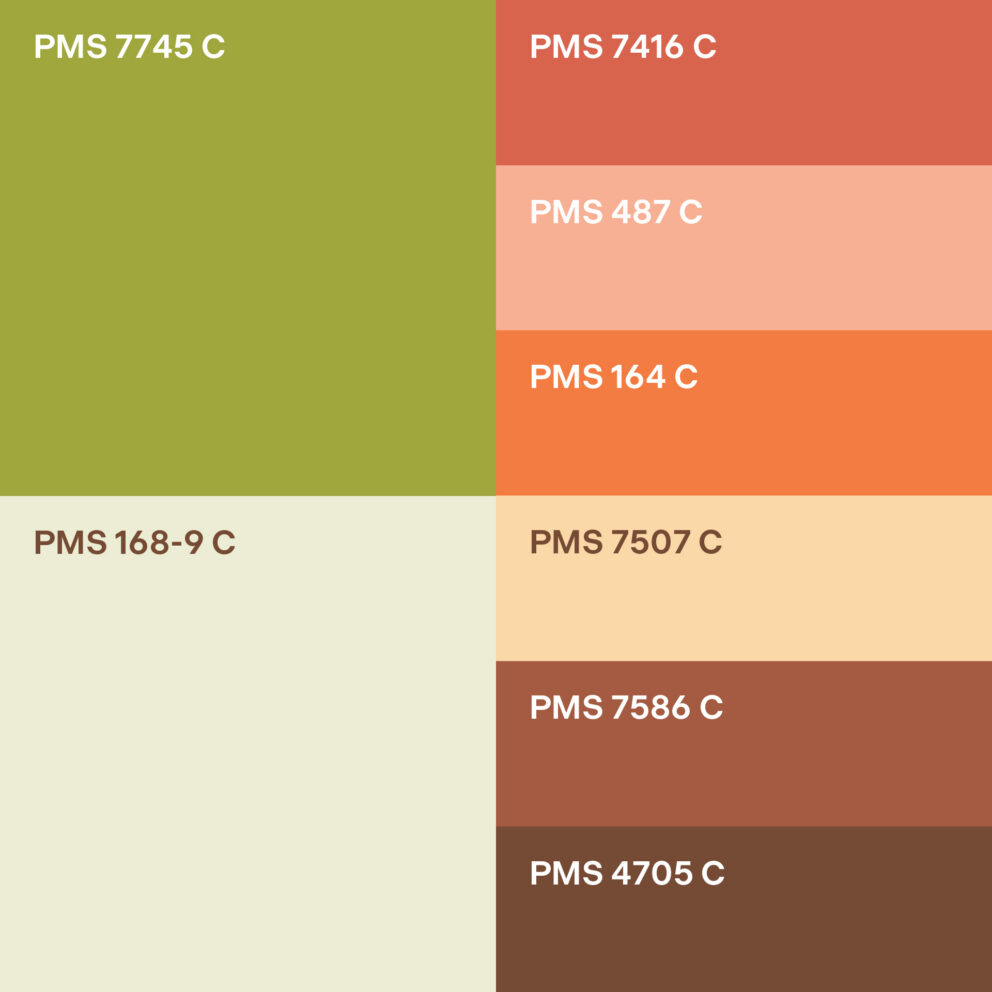
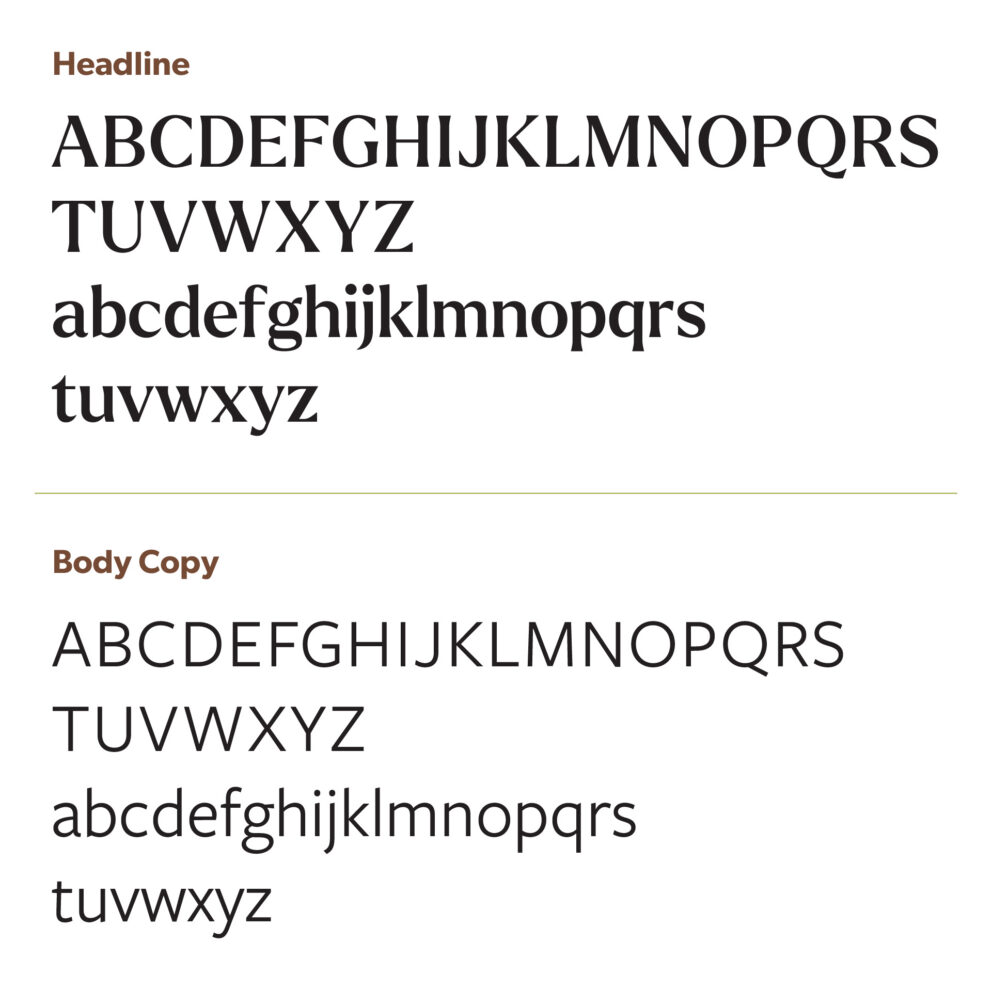
Brand strategy and development is about focusing on the foundational elements of your branding that can be controlled, or your visual identity. That’s the things the world will see at first glance, like your logo, color scheme, typography, packaging and any elements like illustrations and patterns.
But it’s not just a matter of drawing a logo and picking a color palette based on a few superficial questions. A brand’s visual identity should just be the tip of the iceberg.
If you want your brand to stand the test of time and really resonate with your target audience, there has to be an awful lot going on under the surface, in the shape of market research, competitor analysis, audience definition, brand promise, brand values, brand positioning, tone of voice, brand messaging, name development and customer journey mapping.
With all that taken into account and the hard work done behind the scenes, a brand’s identity will start to take shape. Once it’s crystalized, brand guidelines can be created so that it’s used consistently going forward, and none of that effort goes to waste.

wait, what are brand guidelines?
Most well-known brands have a set of fixed, established brand guidelines up their sleeve.
Think of them as an instruction manual. They’re a detailed resource that lays out all the visual and verbal standards decided upon for the brand, that will act as a roadmap for absolutely any inward or outward interaction the company has.
We’ve already mentioned how important consistency is, but as you probably already know, staying consistent isn’t easy. Brand guidelines are gold dust for companies because they mean there’s no more guesswork involved, and everyone is firmly on the same page.
A brand guidelines document will typically include sections like how a logo can and can’t be used, with a complete list of approved logos, approved colors with color codes for digital and printed materials, parameters for writing in the brand tone of voice (TOV), and more.


great, so how can I start developing my brand?
Every company is in a unique situation, so there’s no one-size-fits-all answer to this question. Brand new companies, for example, will be starting from scratch, but might already be using several undefined strategies.
Existing companies who are looking to rebrand might already have a well-defined existing audience, but be hoping to connect with them in a different, more intentional way.
The very first step you can take is to start mulling over three simple questions that will get the cogs whirring in your mind. Questions you’ll almost certainly be asked by any designer or branding agency you decide to work with:
- Who is my audience?
- How do I want my audience to perceive my brand?
- What is one unique thing I can offer my audience that my competitors don’t?
The answers to those questions will become the foundations of your brand, and guide all the important decisions you make in the future.
And the next step? Getting the support of professionals who can guide you through this process.
If you’re ready to get your branding journey underway, the best place to start is a conversation. Get things going by sharing a few initial details with us, or read about our services.