You’ve got a new logo you’re proud of. It’s ready for action, and you’re excited about what it’s going to do for your business.
If you’re reading this article, you’re probably starting to realize that however good your new logo looks, there’s so much more to branding than that.
And you want to understand how you can make your brand work for you, using your new logo as a jumping-off point.
First up, ask yourself why you decided to invest in said logo, mentally, emotionally and financially. Your answer will probably have something to do with wanting your company or organization to look its best. You wanted an image that fits you like a glove and draws all the right people toward you.
But if that’s your goal (and for your business to thrive, it should be!), then you need to take things further. Your logo will influence the way people will perceive you, absolutely, but it’s by no means the end-all be-all.
There’s so much more to your brand than that, as we’ve mulled over in another article, which takes a deep dive into the concept of branding[1] .
Once you’ve got a handle on what branding really is, you’ll start to wonder how you can take the beautiful logo you’ve got sitting in files on your computer and use it to your advantage, building out the rest of your brand.
Let’s imagine a branding sandwich
You won’t be surprised to learn that, at Visualink, we love a visual metaphor.
So, here it goes:
Consider the structure of a sandwich.
- Think of the bottom slice of bread as your logo. It’s the visual foundation and representation of your brand.
- Think of the meat as what the customer experiences. It holds the most nutritional value, and it’s kinda the whole point.
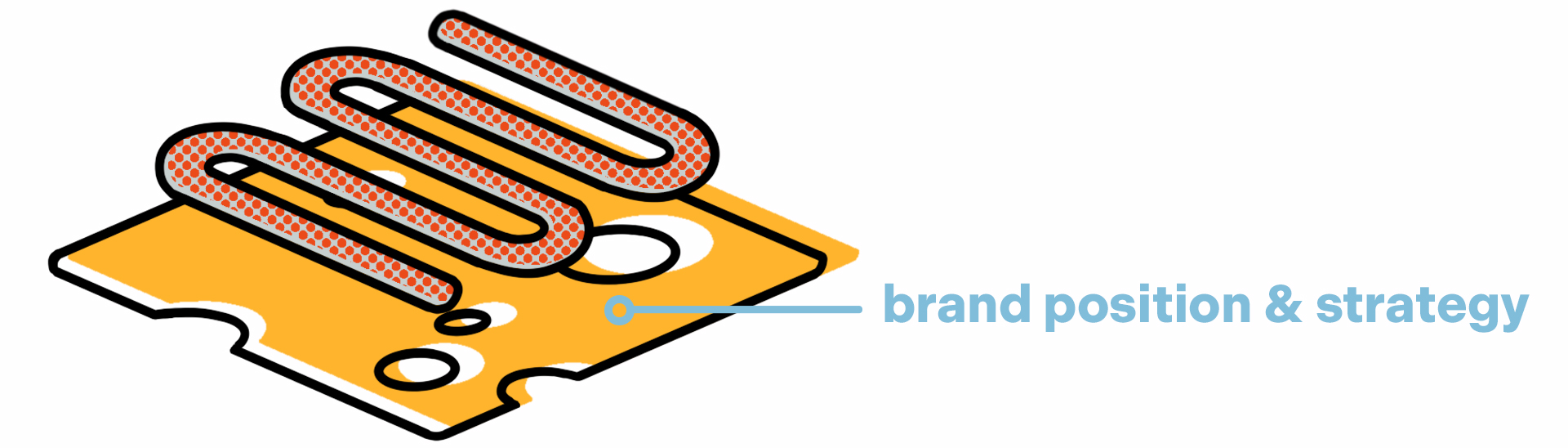
- Think of the condiments and seasoning as your brand position and strategy. These have a big influence on the overriding flavor, and go hand in hand with your customer experience.
- Think of the top slice of bread as your marketing. How your customer hears about you and interacts with your brand.
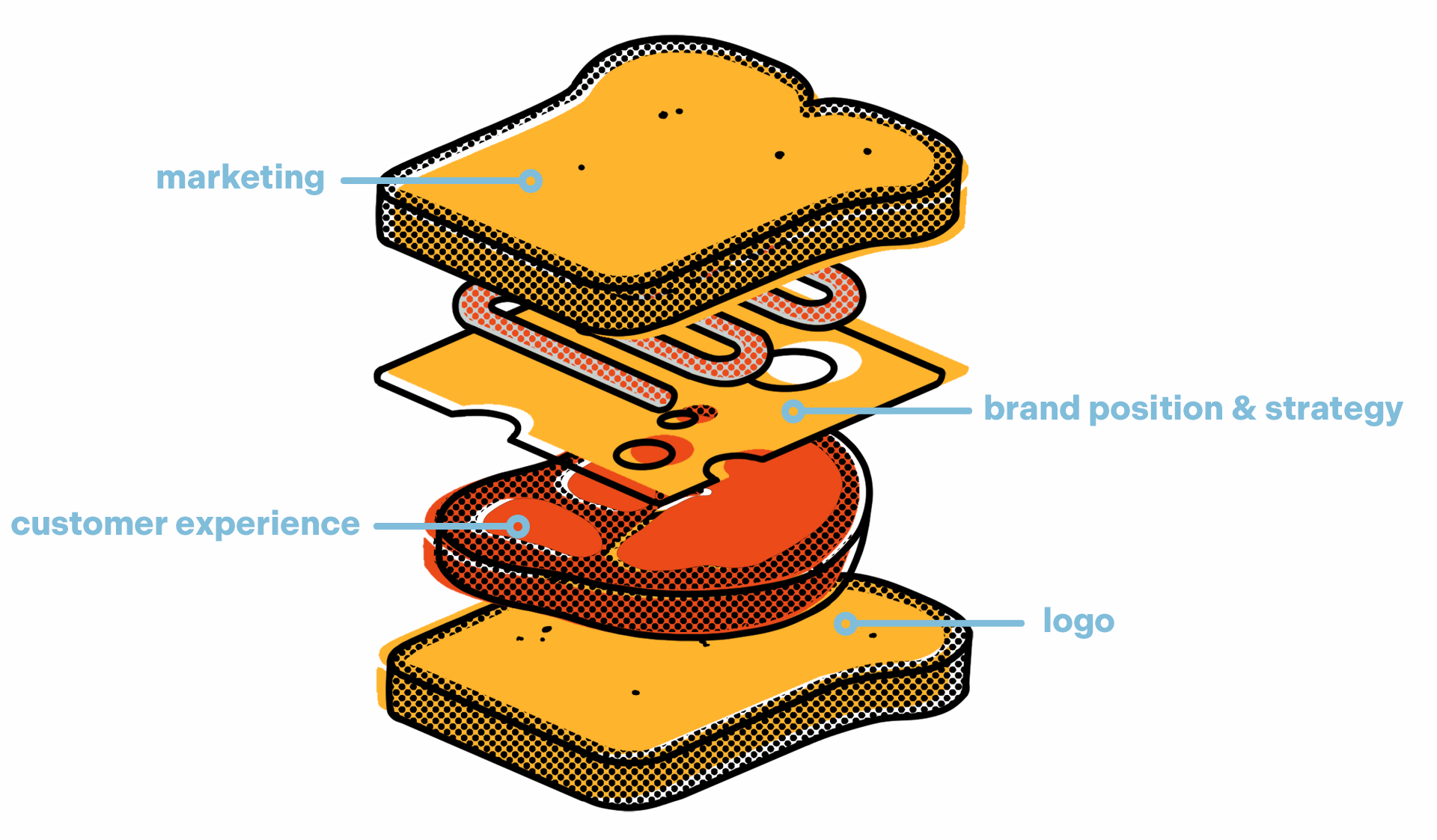
Now, when you look at the sandwich, you mostly see bread. When you hold the sandwich, you’re touching bread.
That’s why a lot of companies fall into the trap of skipping the filling and jumping from their logo to their marketing without thinking about their brand strategy and customer experience, or how the two intertwine.
As a result, customers are left feeling disconnected and unsatisfied, because although it’s true it wouldn’t be a sandwich if it weren’t for the bread, it also wouldn’t be much of a sandwich if it didn’t have a filling, now would it?
A closer look at the layers of your branding sandwich
Bottom slice of bread: your logo
This article is all about what to do AFTER you’ve got yourself a great logo, so we won’t spend too much time analyzing the bottom layer of your sandwich.
Sure, quality bread makes a big difference to the overall taste, but the main thing we’ll say here is that it’s important to manage your expectations around what that killer logo will do for you.
Repeat after us:
- “My logo is not my brand.”
- “My logo is not my visual identity.”
- “My logo is not how customers will find me.”
- “My logo is not how customers will connect with my company.”
You can’t do without an attractive logo, but according to Merriam-Webster, a logo is simply “an identifying symbol.” No more, no less.
So if you don’t build on it, as you would on that bottom slice of bread, it isn’t going to satisfy your customers’ cravings.

"There needs to be connective tissue between what a brand says it does, and how it makes people feel."
Emily Heyward
Though we’ve tried some awesome vegetarian sandwiches in our time, for the purposes of this analogy, we’re going to use meat. Vegetarians, bear with us!
The meat might not be all that visible, with the bread and toppings masking it, but it’s still the heart of the sandwich. You’ll choose the specific type of bread, and pick your toppings and condiments based on the meat. Or, in this case, the customer experience you deliver, and how you make people feel.
If it weren’t for your customers, your company wouldn’t exist. And that’s not always easy to swallow, because customers aren’t always easy to deal with.
They’re looking out for number one, and they have their needs and conveniences top of mind. The fact that you’re a family business started by your immigrant great-grandfather who had $3 in his pocket isn’t a priority for them.
For a filling, satisfying customer experience, you have to let them know you’re on their side, looking out for their needs too.
To do that, you need to exactly know who they are, and what their needs are. Get familiar with your audience and study them in detail. Look at their spending habits, put yourself in their shoes, and ask why they make the decisions they do.
Tip: You also need to know who your audience is not. You may think your product or service is for everyone, but if you don’t laser focus on your core audience (the ones who will become your biggest fans), you’ll never fully engage and connect with them.
The best way to find out about your audience is to ask them. Think surveys, interviews and study groups. Don’t shy away from the hard questions, because the deeper you dig, the more gold you’ll find.
This is your chance to figure out how you can connect on a deeper level. What’s missing from their life that you can provide them with?
All that will give you the information you need to tailor a customer experience that will keep them coming back for more.
Everyone’s got their preferences, but we’re fans of a sandwich with a little crunch, like lettuce and onion. And no sandwich is complete without seasoning or sauces for extra pep and flavor.
It can’t just be any sauce, though. If you don’t think carefully about the meat and make sure the flavors complement each other, the results could be disastrous.
Imagine slathering a layer of Nutella on a salami… No, wait, don’t imagine that, it’ll make you feel nauseous.
A nice Dijon mustard with a kick? That’s more like it. That’s the equivalent of a strong brand position and strategy.
Before taking your new logo out for a spin, take time to define the details of who you are, how you sound, and how you appear, because when you put your brand out there, it has to be deliberate and consistent.
That’s why, at Visualink, when clients come to us saying they “just” need a new logo, we recommend they go deeper if they really want their brand to thrive, and work on both their visual and verbal identity, building out a comprehensive, rock-solid brand strategy.
Strategic brand positioning is about defining your place in the market, and what sets you apart from the crowd. It’s about nailing down your brand’s core vision and message.
On top of the work you’ve already done to pinpoint your ideal customer and their pain points, you need to analyze your market and your competition, and get very clear on your USP (Unique Selling Proposition). Think about what you can offer your audience that others can’t.
Although your marketing will all be focused on your customer, you need to have clarity and confidence around what your story is, and what you bring to the table.
And once you’ve defined your strategy and positioning, it’s important to stick to it. Live up to the promises you’ve made.
This layer of the sandwich can be trickier to get right than you’d think. If you’re struggling, here are three initial questions you can ask that should guide your thoughts in the right direction:
- What do you want your audience to think your logo stands for?
- What persona are you going to take on to relate to your audience?
- How are you committed to helping your audience?
Top slice of bread: marketing

Your marketing is the first point of contact anyone has with your brand, just like that top slice of bread. It’s about letting your customers know who you are, what you can do for them, and how to take action.
Hoagie rolls, ciabatta, rye, pretzel buns. There are a lot of options for sandwich bread, so many of them are delicious. We all have our go-to choice, but if you try something new, you can be pleasantly surprised.
In the same way, there are countless methods you can use to grab attention and connect with your audience through your marketing.
We could spend all day talking about marketing strategies, but here are some top tips to get you started.
- Based on research and surveys, figure out which social media platforms your customers are on. Because, logically, you need to be where they are.
- Don’t try and spread yourself too thin. Use one or two channels to begin with, and use them well, and then think about expanding.
- Consider the myriad options beyond social media: Email marketing, direct mail, trade shows, websites, sponsorships, search advertising, radio spots… We could go on.
- Tailor your content to each of your marketing channels. For example, you wouldn’t put a 30-minute TED talk on TikTok, but you might on LinkedIn, if it’s built to speak to your audience.
- Remember, if you’re doing any kind of marketing just to get in front of people, it’ll fall flat. It’s gotta connect on a personal level.
- Demonstrate how you solve your customers’ problems. Use unconventional ways to get the point across so you don’t just blend in.
- Once you put stuff out there, be sure to track any metrics you can. That’ll give you a read on the response, what’s hitting and what’s not.
- And, of course, never forget to keep a tight hold on that bottom slice of bread, because the top slice won’t be much use without it. Keep your locked-in branding and logo consistent throughout your marketing.
Hungry? Your audience is
You’re in business to serve up much more than just a plain slice of bread, so it’s time to go beyond your logo.
For a thriving brand with an engaged audience, get clear on who you are and what you do, connect with your customers on a deeper level, and interact with them in authentic, consistent ways that make sense for your company.
For clear, practical, friendly guidance on how to navigate and manage your budding brand, contact us here at Visualink.