Brand strategy and brand identity.
They sound so similar. Is there really a difference?
There sure is.
And understanding that difference could have a powerful impact on the way your business is perceived by your all-important target audience.
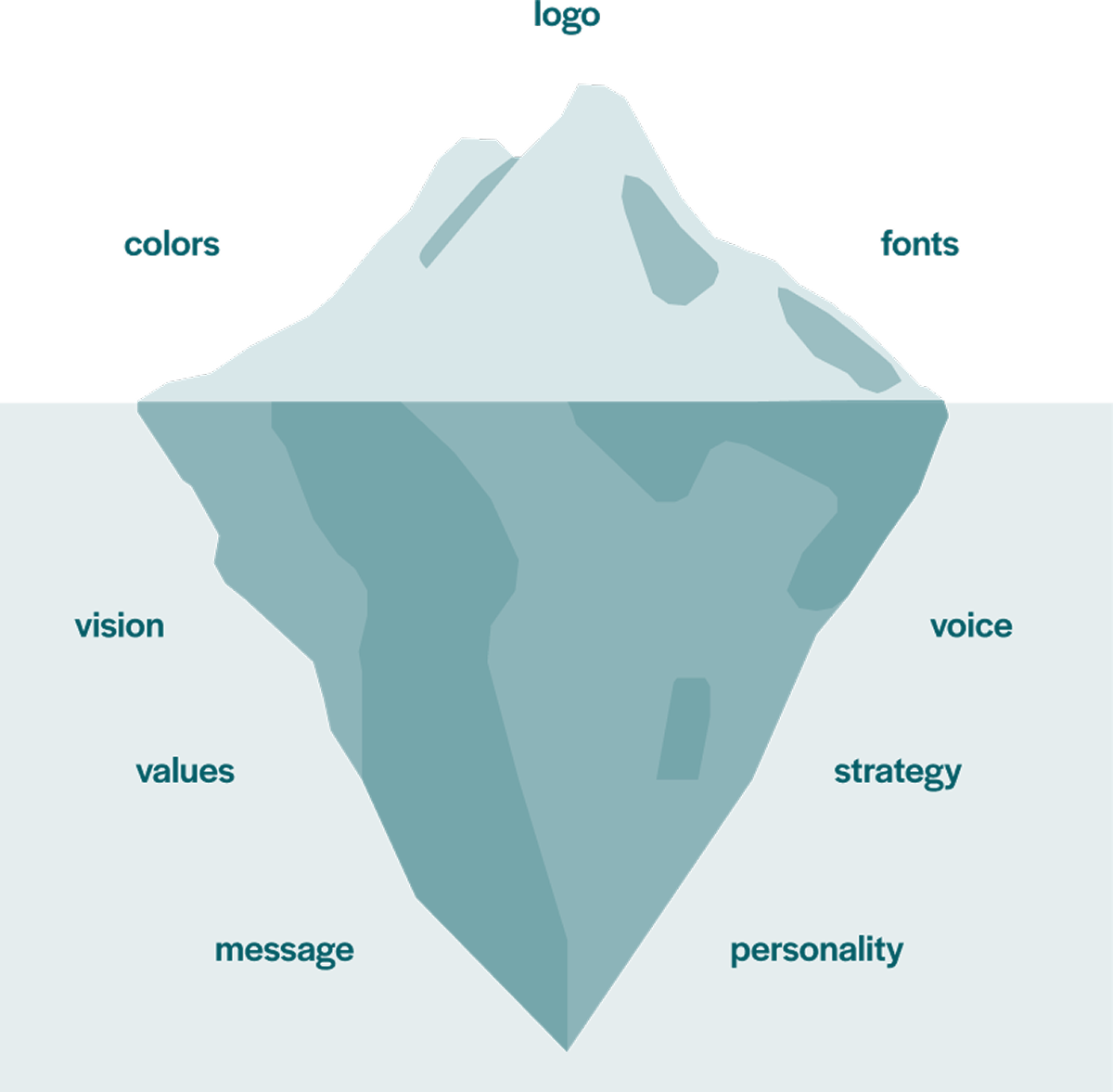
Our trusty iceberg metaphor, which you might remember from “What is branding?”, is a big help when it comes to getting a handle on the two concepts.
Picture it: your brand identity is everything you see above the surface, and your brand strategy is everything you don’t see that’s going on underneath.
This clear, jargon-free article will clarify everything you’re unsure about and help you lead your brand to the success it deserves.
Grab your coat, let’s go hunting for icebergs.
what is brand strategy?
Imagine someone surprises you with a spur-of-the-moment grand vacation. Your ride to the airport will be here in 30 minutes.
You probably wouldn’t simply toss a few items in a bag and hope for the best. You’d take a few minutes to ask some questions. Maybe, “Where are we going?”, “What’s the weather like?” “Should I bring my snow bibs or my swimsuit?” “How long will we be gone?”.
Knowing all that will help you prepare, and let’s face it, you’ll probably enjoy your trip to Northern Greenland far more if you’ve packed accordingly. Because it doesn’t matter how beautiful those icebergs are if you’re the one turning into a block of ice.
In a similar way, brand strategy is about asking the questions that lay the best foundations for your customers to have fantastic experiences.
Marty Neumeyer, who defines what a brand is so well, also has a great definition of brand strategy:
“A plan for the systematic development of a brand in order to meet business objectives.”
defining your brand strategy
Take some time to figure out where you want your business to go and get clear on those objectives.
How do you want it to be run? Who’s your audience? How are you going to make a difference to their lives? Where do you see growth potential?
Write down everything that comes up and build out your vision. Don’t take the easy road and give obvious answers. You can’t simply say your business objective is to be profitable. You can’t say your audience is “everyone.” It has to go deeper.
With your goals decided, it’s time to figure out your systematic plan for reaching them. This is your brand strategy, the part of the iceberg lurking underwater. No one will see it, but it’s totally vital if you don’t want the whole thing to sink. And the deeper it reaches, the higher it will climb above the surface.
Your brand strategy defines who you are, how you fit into the market, what your USP (unique selling proposition) is, who your audience is, and how you interact with them.
It gives you something concrete to base all your decisions on, so you’re not just relying on your own tastes, which might not appeal to your audience.
Figuring out all this isn’t easy and can take time, but once you’ve got solid answers, you’ll have a clear roadmap.
your brand strategy broken down
Let’s get more specific about how you can create your brand strategy.
Here are three of the main pillars to focus on:
- Audience definition: Your product or service isn’t for everyone, promise. You have a specific audience that needs what you offer most because of a problem they regularly face. Find out who they are, what happens to them when they come up against said problem, and how you can connect with them to introduce your solution.
- Research: Market insights can tell you how customers are behaving and interacting with similar brands. That’ll help you uncover customer pain points and opportunities, so you can fill gaps your competition hasn’t even thought about.
- Brand positioning: By crafting a simple statement that explains who you are, who your audience is, what you offer, and how it’s unique, you’re enabling your team to act consistently.
The strategic plan that all these elements create will be laser-focused on customer experience, meaning everything you do is consistent and logical, helping build trust.
did you know?
Brand strategy can be broken down into two phases:
Foundational: Defining who the brand is, why it exists, and how it interacts in the world. Our focus for this article.
Ongoing: Applies more to marketing and ways to keep your audience engaged. This is about mixing up your game plan depending on who you’re facing on the field. It’s the next step to focus on once you’ve got your foundational strategy and brand identity nailed.
what is brand identity?
If you were asked to describe yourself, what would you say?
You’d probably start with your name. Then, you could talk about where you live, your likes, your job, your favorite food, and maybe a fun fact. You’ll probably describe your appearance or share a photo.
Similarly, your brand identity is made up of the foundational visual elements your audience sees. Whether it’s a first impression or the 58th time a customer interacts with your brand, it should be recognizable and relevant.
It starts with your:
- Name: People need to know what to call you. Your name should resonate with your audience and be easy to remember and repeat.
- Logo: A primary identifier, this should symbolize what your brand stands for and what your audience needs.
- Brand colors: Working alongside your logo, colors can be powerful, evoking thoughts or feelings and making you instantly recognizable. Think Home Depot, McDonald's, or Tiffany. What colors come to mind?
But that’s just scratching the surface of everything that makes up a full brand identity, often divided into two categories: visual and verbal, as we’ll see in the table below.
brand strategy vs brand identity: the key differences
If your brand identity is the what, your brand strategy is the why.
Your brand identity is what your customer sees when your brand is introduced to them, and your brand strategy is made up of intentionally implemented ideas that impact the way your customer feels when they interact with your brand.
Here’s a summary of what falls under each category:

why you need a brand strategy and brand identity (and just one won’t do)
“Brands erode when they try to please everyone, over-invest in superficial touchpoints, or jump to execution before strategy.” - Todd Henry
One of the biggest mistakes that startups make when developing their brand is jumping straight to the brand identity (which, let’s face it, sounds like the fun part) without first defining the brand strategy.
The result? A look and feel that doesn’t properly represent your brand. Something feels slightly off, and people don’t perceive it in the way you want them to.
Simon Sinek doesn’t directly talk about brand strategy, but in parallel, he does address the idea of “The Why”:
“When you start with WHY, those who believe what you believe are drawn to you for very personal reasons. It is those who share your values and beliefs, not the quality of your products, that will cause the system to tip.”
Defining your why and asking the deeper questions involved in building a brand strategy creates a solid foundation that allows your brand identity to target the right audience and engage with them where they are.
If you’re tempted to just focus on strategy or identity without worrying about the other, just remember the image of the trusty iceberg. There’s no point doing all the brand strategy work under the surface without a brand identity to stand proudly above the waves.
And in turn, there’s little point in sculpting a brand identity if it doesn’t have anything to rest on below the surface. Your brand strategy might not be visible, but your customers will be able to feel its solid, underpinning presence.
the brand development process: from strategy to identity
When it comes to creating brand strategies and identities, there’s no chicken/egg dilemma.
Your brand strategy should always come first, because it shapes your brand identity. If you addressed strategy second, you’d have to circle back and rework your identity accordingly, wasting both time and money.
Here at Visualink, we have a proven, intentional, four-phased process for brand development (Discovery → Strategy → Identity → Implementation), designed to pave a clear path for your audience to experience your brand the way you want them to.
- Discovery: You tell us about the story of your brand and the problems you face.
- Brand strategy: We ask you questions to uncover solutions and opportunities, and we work together to define statements and lay plans for impacting the way a customer understands and interacts with your brand.
- Brand identity: Building on your brand strategy, your visual and verbal brand identity can take on more meaning and better connect with your audience.
- Implementation: Pulling all this together, we create brand guidelines so that consistency and intentionality are no longer a struggle, and your future marketing initiatives and website design are all built on solid ground.
a brand that’s defined, not frozen
While it’s important to stick to your brand guidelines, there also has to be room for your brand to adapt and grow. People change, economies change, and technology definitely changes. So adjustments will need to be made.
That being said, there’s no need to change just for change's sake. We saw this first-hand with a well-known, Nashville-based company, Cracker Barrel. They tried to adapt with the times, but didn’t take into account the sentimental, down-home, cozy place in their customers’ hearts they were betraying in the process.
a brand development case study: Lakeside Homes
Visualink was approached by Lakeside Homes. They weren’t reaching the right audience because there was a lack of clarity around their target audience and position within their industry.
Through research and strategy sessions, we uncovered important details and redefined, renamed, and rebranded Lakeside Homes into Clayton Park Models. Now, they’re tapping into their true audience and are set up to position themselves as an industry leader.
Find out more about how our brand strategy impacted Clayton Park Models’ brand identity.


iceberg ho! creating a solid brand strategy and identity
We hope, by now, it’s crystal clear that you need both a strategy and identity to build a brand that will stay afloat.
You might come across different terms for these two concepts depending on the article you read or the strategist, designer, or agency you work with, but the facts remain the same.
At Visualink, we’ve tried and tested the process so many times, we know the right way to approach brand development.
Ready to get going?
Start sculpting the foundations of your brand strategy by asking yourself these three questions from our piece on “What is branding?”:
- Who’s my audience?
- How do I want my audience to perceive my brand?
- What’s one unique thing I can offer my audience that my competitors don’t?
And if that sparks something in your mind and you decide it’s time to go deeper and set your company or brand apart with professional support, just reach out to us by filling out this simple form.