what is the importance of brand guidelines?
Think of any popular brand in your mind and what may show up in your consciousness is a recognizable logo, or perhaps a distinct color. The Coca-Cola white logo on its signature red, Home Depot orange come to mind? What you have harnessed as a mental image is the brand impression made by these very successful, distinct companies. And behind those impressions are some very important and historically robust brand guidelines.
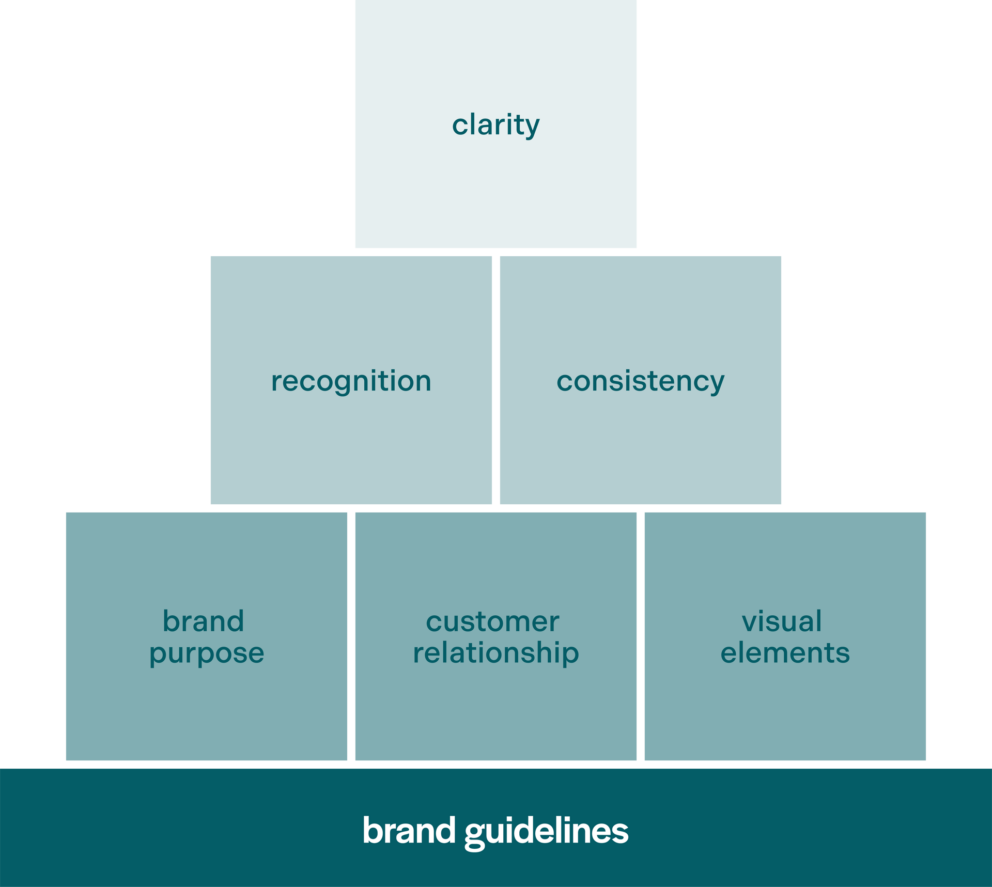
Brand guidelines are, at their core, the foundation and story for your brand. An instruction manual of do’s and don’ts that establishes consistency in how to communicate your brand to your customers. Consistency within brand guidelines is exactly what is needed to become recognizable to your audience.
Following thorough brand guidelines means understanding how to speak to your customer in a verbal sense—whether that be a voiceover script or email copy, and how to display the brand visually—from logos all the way to bullet styles, photography tone, colors, and fonts.
If followed correctly, you are on a path to brand clarity that is enviable. A document that is easily shared, understood, and can act as your singular source for any brand questions. Whoever accesses this document, whether they are a coworker or a contractor, will be able to flawlessly execute materials that are on-brand in tone of voice and visual consistency.
What are brand guidelines?
Simply put, establishing brand guidelines (sometimes referred to as a Style Guide, Brand Book, or Brand Manual) is a way to set rules and boundaries around how your brand is communicated. They can be used by anyone with a need to familiarize themselves with your brand.
Here are some examples of individuals who could benefit from a brand guide:
- Graphic designer needing Pantone® color matches for a banner design
- Copywriter needing brand voice examples to write copy for a webpage
- Freelance photographer you hired understanding your brand style for a photoshoot
- New employee in leadership seeking a quick summary of your brand’s core values
- Contractor building a training or instructional program for your branded product
- Manager for your company sending out a branded customer email
The payoff for establishing an approved set of guidelines is that they can be accessed and utilized by anyone who needs them at any time and don’t require context to be clearly understood.
An important distinction about these guidelines is that they are not customer-facing. They are great for internally directing your team on how to speak to your customers, but the only part your customers should see is the result of your hard work creating these behind the scenes—the marketing pieces and resources you put into the world as a result of defining your brand with this guide.
Also, while creating this guide can provide you with important foundational elements for your brand, it will not be a document that outlines your complete brand strategy. To learn more about brand strategy development and how that differs from this process, see this article.
Why brand guidelines are essential
There are many reasons you should put “create brand guidelines” at the top of your business’s to-do list. Among the top reasons would be establishing that brand consistency and recall previously mentioned. Consistency is a brand’s secret recipe for recognition. If your customer is exposed to your brand in a consistent way over time, a relationship begins to form. Then, instead of asking for a ‘tissue’, they find themselves asking you to pass them a ‘Kleenex’ during allergy season.
Another fantastic reason is the usefulness of having this guide available to your brand team, freelance partners, or anyone outside your organization who touches your brand in any way. Companies change and grow, restructure and move. Meanwhile, your customer is comfortable seeing the same brand they know and love, regardless of internal changes.
The “guidelines” part of this piece allows the user to understand more about the brand’s foundation and values and therefore introduces the opportunity for innovation and future brand exploration. It provides a clear understanding of what the brand does (and doesn’t) stand for.
For example, your small retail business might be rooted in your physical store location for now, but later you may learn your audience has a large web presence and you decide that e-commerce is the next smart move. While the brand guidelines you created in the beginning don’t specify anything related to web usage, they can help the web designer make informed decisions on what user experience is right for you based on the core values and purpose behind your business, as well as design and layout decisions based on the visual asset resources in the guide. Suddenly, without much guidance from your team, your new website is on-brand and hits the sweet spot on the first draft.
When do you need brand guidelines?
When is the right time to build a set of brand guidelines? Now! Now is always the right time! However, before diving in too fast, you’ll need some important brand discovery first, including:
- Brand Name
- Visual identity (logos, color palette, typography palette, supporting visual elements, etc)
- Verbal identity (tone of voice, tagline, brand story, product descriptions, etc)
- Brand purpose and values
- Audience
- USP (unique selling proposition)
If you have questions about how to properly establish the items listed above, read our blog post “What is Branding” or reach out to talk to us about how we can help.
Once those decisions are in place—which is no easy feat—you’re ready to go! And the process of building the brand guide can also help you discover what might be lacking in those initial ideas. That’s where the experts come in: to ask those helpful questions about your brand you haven’t even needed to consider yet. And therefore, forging a path to brand clarity and recognition for the future.
If any of the scenarios below sound familiar, it’s time to consider developing brand guidelines for your company:
- Your logo is used by multiple people (most of the time inconsistently)
- You get a lot of questions about your brand or business
- Your website looks very different than your marketing materials
- The company newsletter sounds like it was written by a lawyer
- The look and feel of your social posts feels lighthearted and fun while your website is professional and full of business jargon
- Every time you outsource marketing tasks to a freelancer, your result looks and sounds different than from the previous freelancer
- If you look at all of your marketing materials side by side, they resemble more of a quilt than a tapestry (separate, disjointed stories)
What to include in brand guidelines
brand story and foundation
"When I’m working with a client, the first thing I try to do is figure out what they’re trying to solve and how to solve it."
In this statement, award-winning designer Michael Bierut easily defines the key building blocks for the first part of a brand manual: Defining the purpose of the brand and what it offers to the audience (the ‘why’ behind it all). Here’s some things to consider in this phase:
- What is the purpose of the brand?
- What does it offer customers?
- What makes the brand unique?
- Who is the target audience?
Another important element of the ‘why’ is defining your brand’s values. Many businesses may offer similar or even the same goods and services. A differentiation for your brand can be simply stating what makes how you do business special. By clearly describing your brand values, you can change the relationship of your brand from transactional to relational, building trust with your team as well as your like-minded audience.
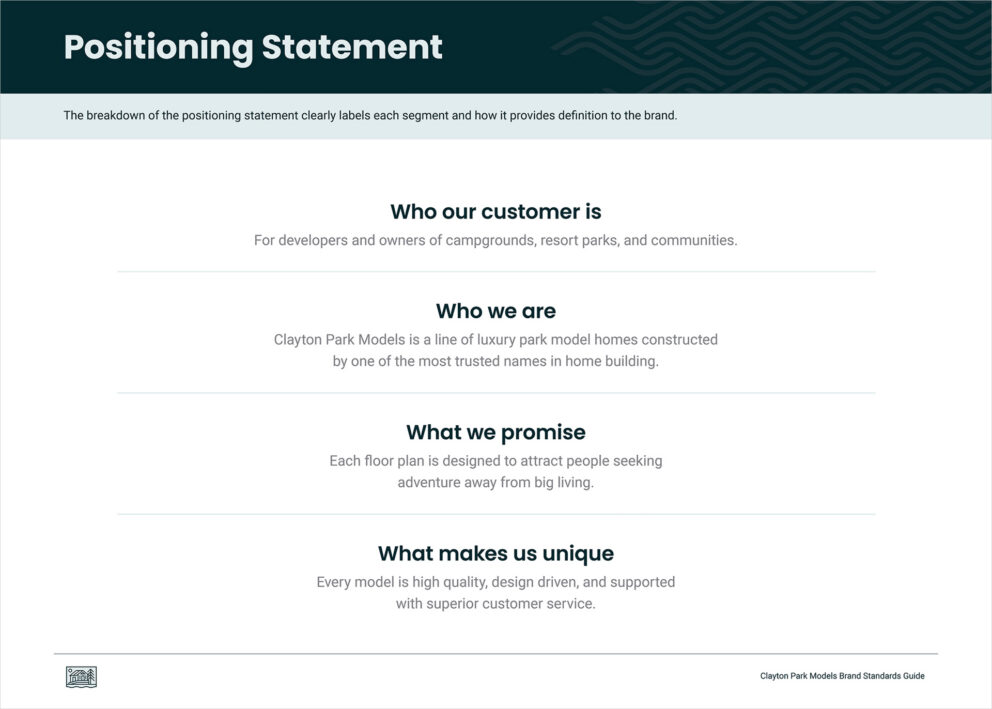
A strong positioning statement can also bring your story into focus in a simpler way: One sentence that defines who your customer is, who your company is, and what you’re promising as a business. It’s the steadfast standard you build for your brand from the very beginning and can live as an undercurrent for future growth and change.
logo usage
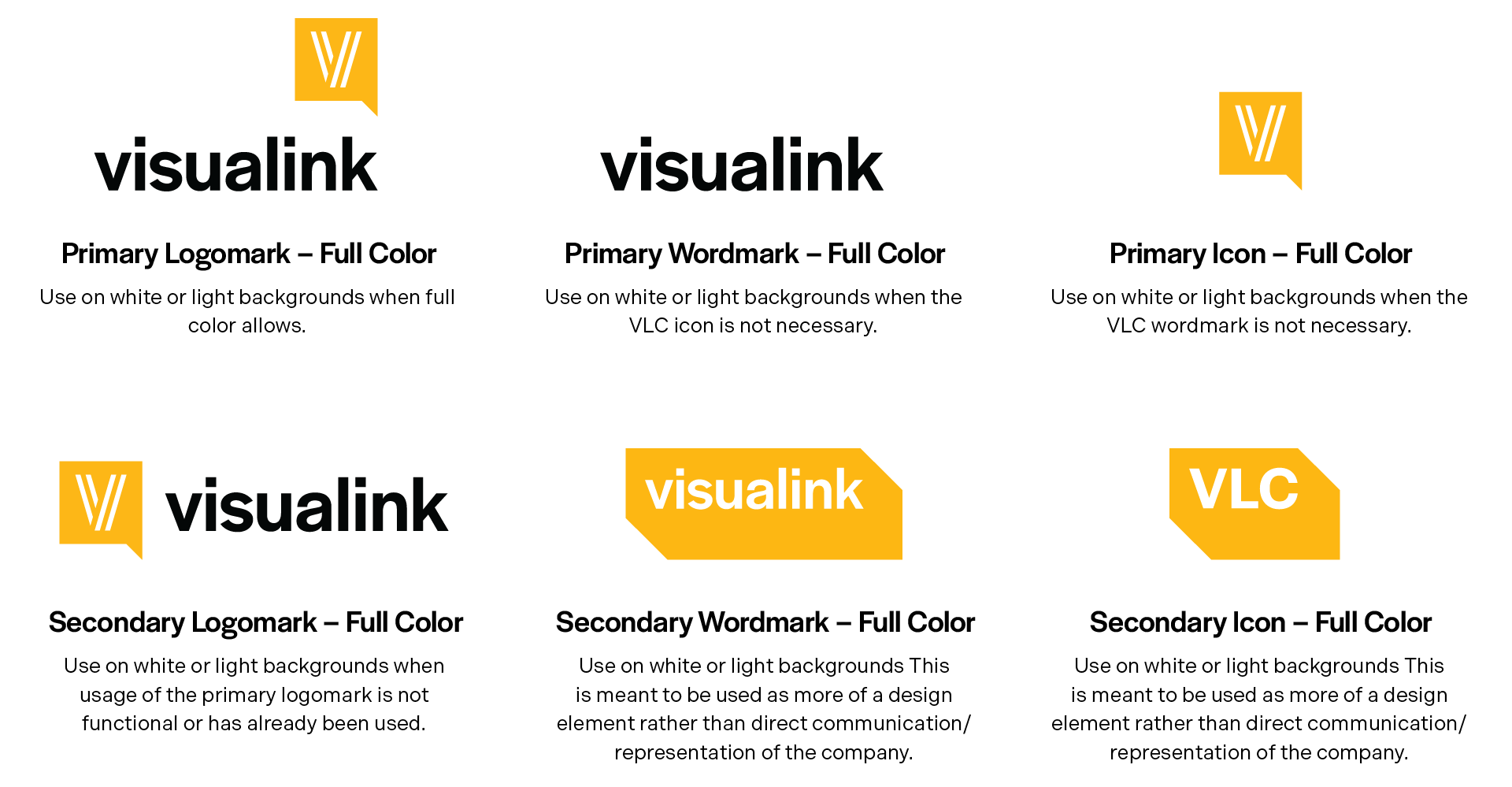
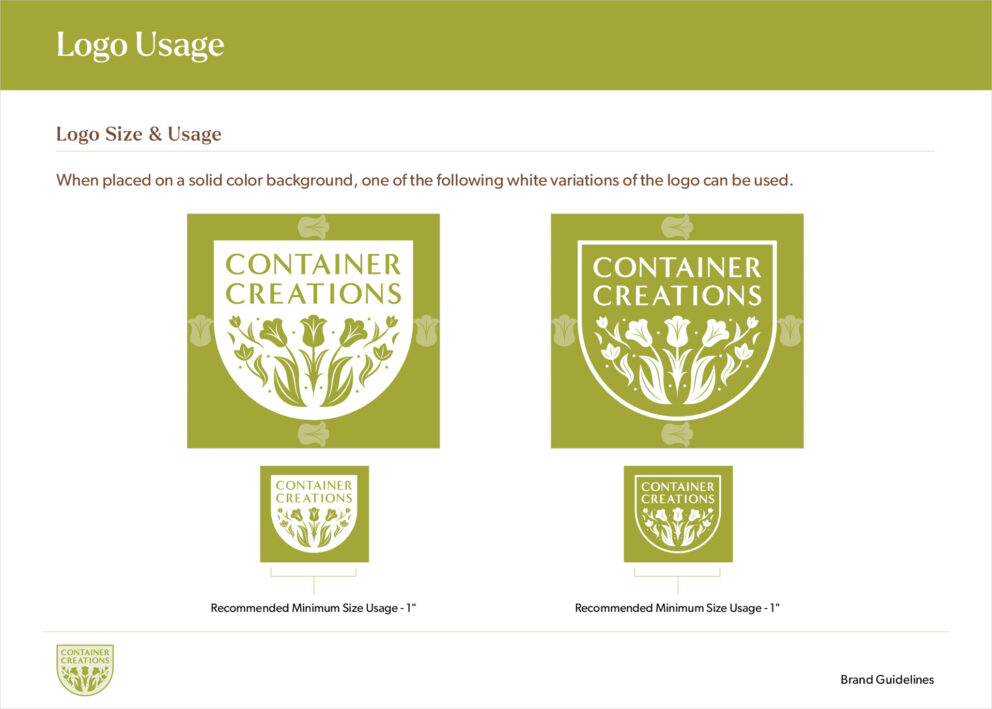
Let’s talk about visuals. Your brand needs a mark. It should be distinct and accessible, giving your brand something easily recognizable. Logos can be an icon, a wordmark, or a combination of both.
While creating these elements, a designer will consider the usage of the mark, the audience, and the practicality of what will bring the most brand recall. At this stage, rules will be outlined on the minimum size of the logo, the usage recommendations for the primary mark vs. the secondary marks, and which color combinations are best for specific applications.
color palette
When a designer considers a new brand palette, they are taking many factors into account:
- Which colors are competitors using?
- Which colors fit this brand’s personality?
- Are there any color psychology elements in play?
- Is the palette varied enough and does it create enough contrast within itself?
- Are the colors true to the brand’s values?
- Is this palette distinct enough to stand out in a store aisle or an online gallery?
We all have varied opinions and life experiences that inform our color preferences which is why this can be one of the trickier elements to define for any brand.
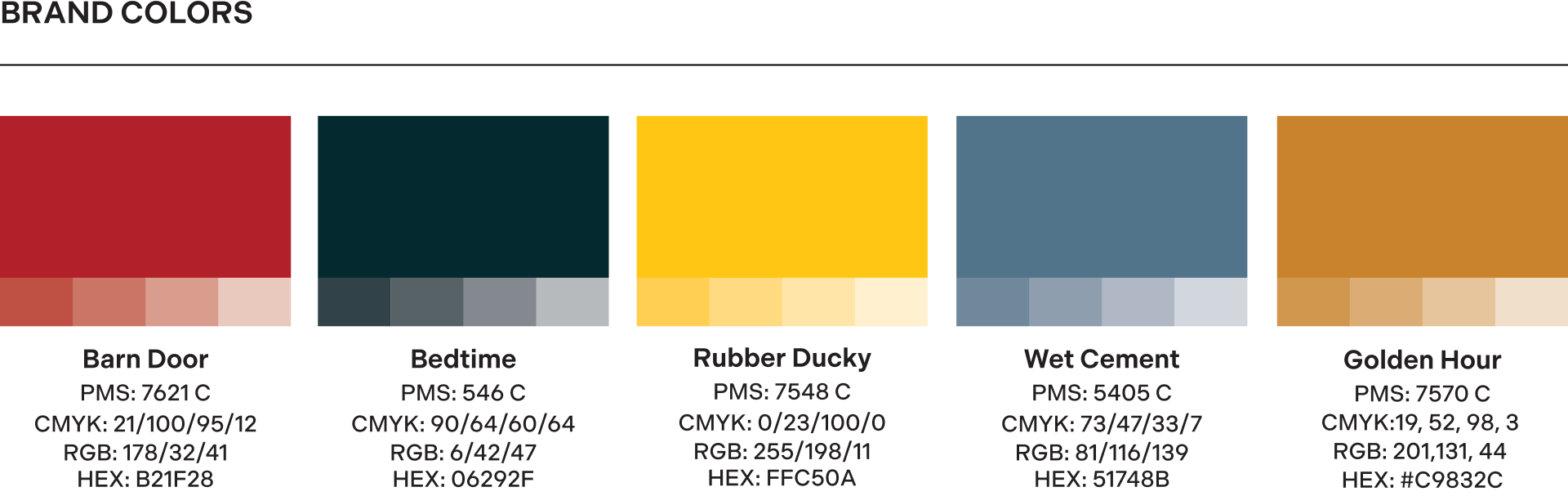
Thorough brand guidelines will display the color palette in a very simple way: listing the primary colors first, the secondary colors at the end, and describing the color breakdowns beneath, including (but not limited to) PMS tones, CMYK values, RGB values, HEX codes, and sometimes even matching Sherwin Williams paint colors. If the designer believes there are specific color combinations to avoid, that would be included in this section as well.
typography
Your designer will select the right typeface(s) (or fonts) for your brand by considering the tone of voice you want to portray as well as considering every other element in the guide so far. It all comes into play when they start to choose specific font styles. The world of fonts is huge and overwhelming, but with help from a great design team, you’ll find a pairing for your brand that conveys the exact mood and style of your voice, while also making sense visually for the needs of your audience.
Brand guidelines (at minimum) should clearly state the headline font, subheadline font, and body copy font for your brand. It is key to maintaining that visual consistency across all mediums. Some guides will include an accent font as well to be used sparingly for visual effect; the rules of which should be clearly stated in the guide.
Particular fonts will also require a set of kerning or tracking rules (the spacing of the letters) for those peskier letter pairings (looking at you A, V, W, Y, L, and T!).
imagery and photography
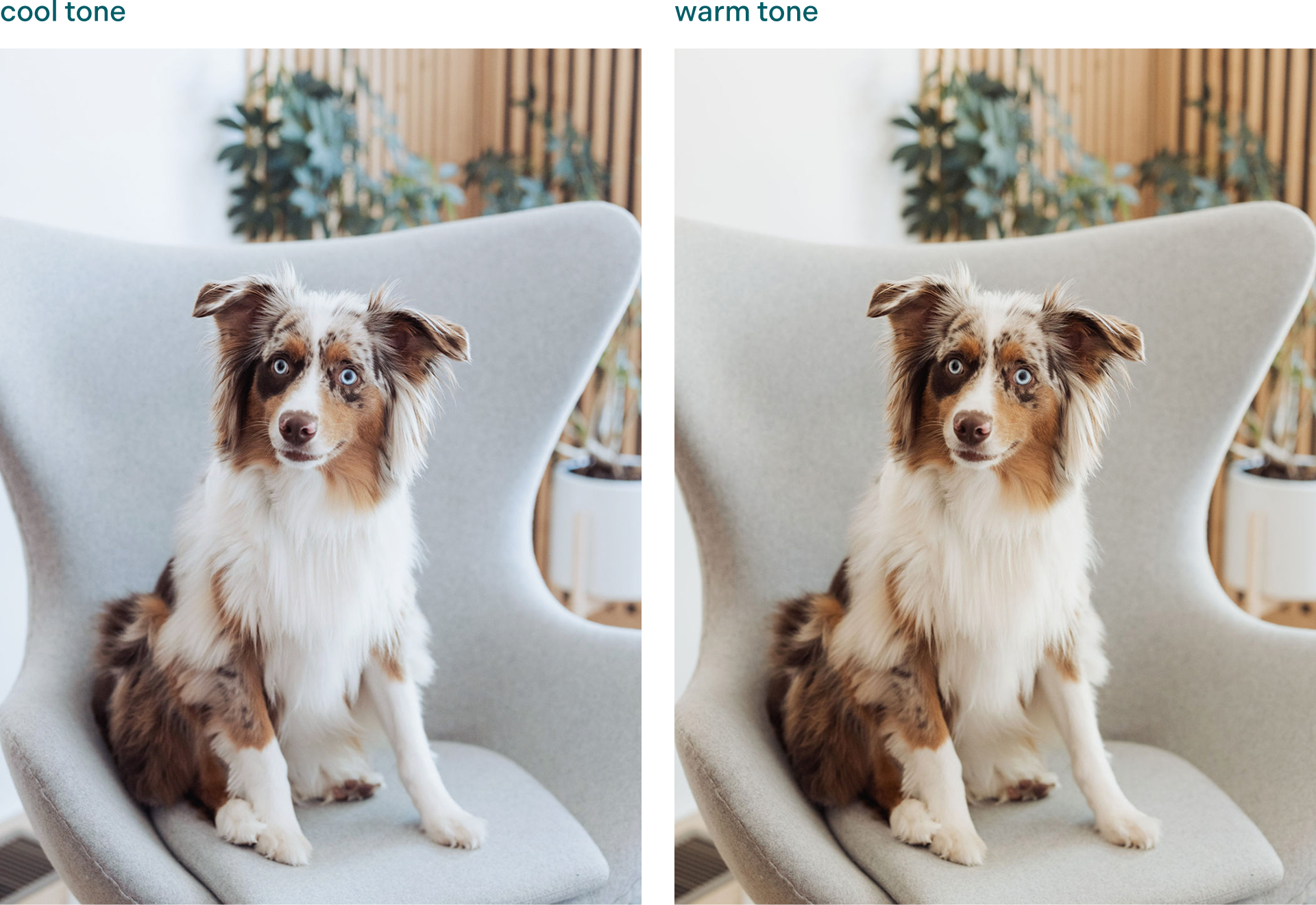
It’s time to set expectations for imagery and photography used for your brand. This is essential, especially if your brand has a unique style or tone your design team has developed. Your art director can assist with a photoshoot, but they may not be in the editing room when some of the tonality/hue/saturation decisions are made by your hired photographer.
It’s a great idea to set the expectations here and give clear examples of what fits and why. Be as specific as possible! If you only want warm lighting, say it! If you only want candid or lifestyle photography instead of typical model shots, say it! Establish what you want in this guide and you’ll save time later in the editing process.
tone of voice
You might have an understanding of what your brand says about your product or service, but how does it say it? Which voice does it use? And where does that voice come from?
Defining your brand’s tone of voice (TOV) can be a little awkward to tackle, because essentially you are assigning your brand a human personality. Your brand’s persona directly informs the voice you develop. It is important that it matches your brand’s mission and values, so there’s consistency in what your customer is seeing, hearing, touching, and even smelling/tasting. There shouldn’t be any unintentional contrast in those experiences.
For example, take the Brawny brand and its plaid-clad, masculine figurehead. What you’re seeing is a bold, chunky font. A strong red motif. A muscle-bound lumberjack. A contrasting tone of voice for this brand would be a tone portraying the softness of the product. Maybe that would look like “inspirational, relational, casual”. In reality, the brand tone that works for Brawny is “tough, resilient, charismatic”, which fits its strong persona.
Here are some common characteristics to consider for your brand’s tone of voice:
- Formal
- Informal
- Empowering
- Aggressive
- Quirky
- Humorous
- Inspirational
- Informative
But the options don’t stop there. Every brand can have a unique personality. What will stand out is the consistency with which you carry that voice through, from your website copy down to your social media posts. Whichever words you land on to describe your brand’s TOV should be clearly stated in simple terms to convey how you will use it. For example, instead of just saying that your brand voice should be Empowering and Aggressive, you would state your voice as:
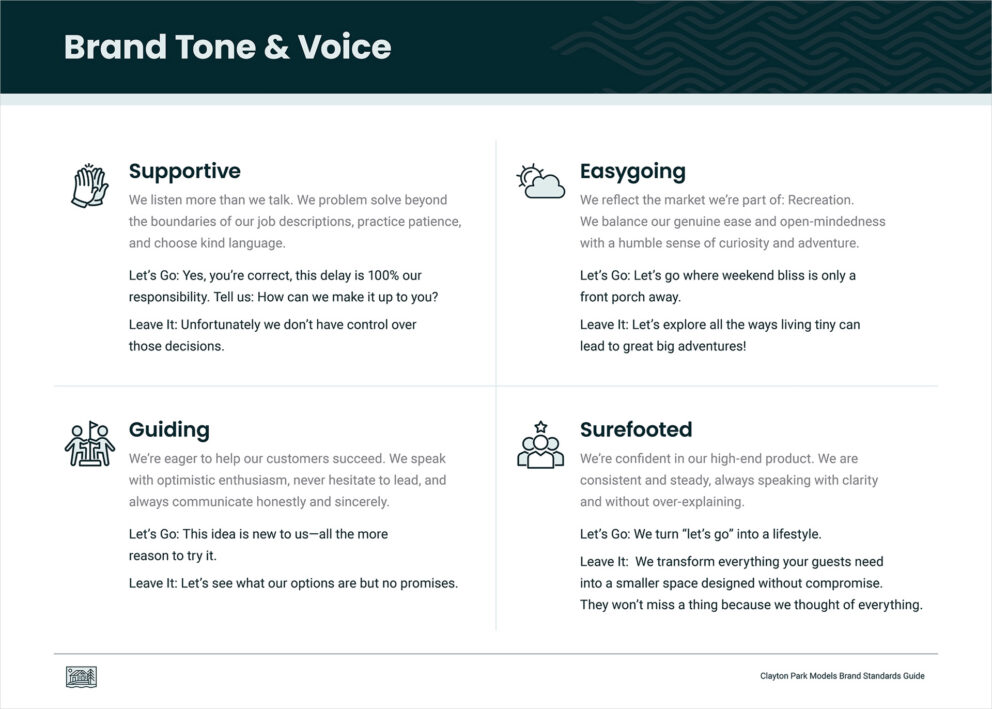
- Empowering: Motivational and positive. We want to encourage success, not use fear or negativity to motivate.
- Aggressive: Strong and bold. Portray confidence with an edgy, rebellious style. We’re not merely suggesting our product is the best on the market, we’re stating it as fact.
You can also explore “we are not” statements to further clarify your character choices:
- We are empowering, but we are not entitled.
- We are aggressive, but we are not combative.
These statements will give a copywriter or content creator a clearer direction for how to communicate your brand, giving you more of that brand consistency in every word your customer reads or hears about your business. You can even provide examples of pieces of copy that portray do’s and don’ts for each statement. Be as descriptive as possible in this guide, and it’s only going to help more in the long run.
brand messaging
Using that tone of voice, your copywriter will be able to present your brand in a nutshell by developing key messages, a tagline or headline, and some boilerplate copy. This is basically what you would want your customer to tell you about your brand (from memory). It should highlight “the one thing” that sets you apart from competitors and makes you stand out in your industry.
Your tagline is your promise. It’s what you deliver your audience and what you believe in, all wrapped up in a very small amount of words. Successful taglines can carry a timeless quality (think “We have the meats.” or “Taste the rainbow.”) that can live alongside your logo forever.
It is most important that the copy you develop here feels authentic to the heart of your brand and can be widely used as part of your brand kit moving forward, whether that be for billboards or press releases.
additional elements (optional)
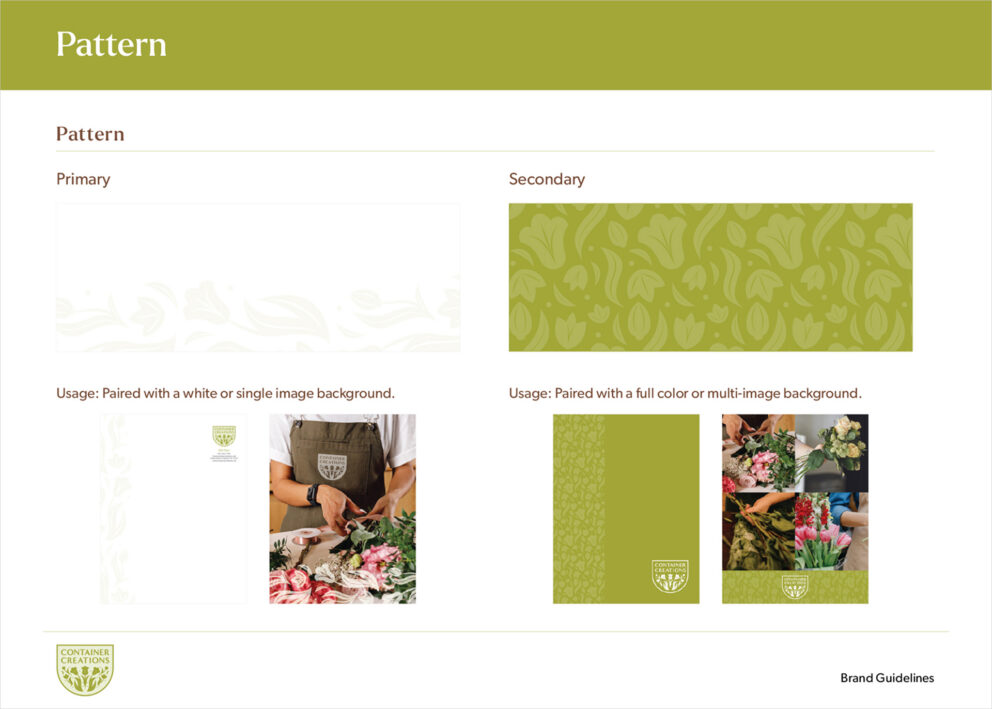
Any added elements are up to you and what’s important for your brand! Optional additional brand elements could include: brand patterns or textures, videography best practices, specific social media standards, packaging templates, and more.
how to create brand guidelines: step-by-step process
step 1: gather all brand assets
Gather all of your brand assets. Include strategy, identity decisions, and any existing brand materials.
step 2: define the structure
Build an outline for the guide featuring all of the sections you’ll use to properly communicate your brand based on your needs and users.
Our recommended order is:
- Brand Guidelines Overview & Usage Requirements
- Brand Story or Brand Experience
- Visual Guidelines
- Logos & Marks
- Color Palette
- Textures/Patterns
- Typography
- Imagery/Photography
- Verbal Guidelines
- Purpose
- Values
- Positioning Statement/USP
- Brand Personality and Tone of Voice
- Messaging
step 3: document standards with visual examples
Be sure to use visual examples to display do’s and don’ts throughout the guide as well as mock-ups for brand materials where necessary.
step 4: write clear, actionable instructions
Keep it clear and comprehensive. Adding reasoning and explanations can pay off if it helps even one more user understand your point.
step 5: design the guidelines document
Have an experienced designer and art director design the guide in a way that displays best practices for how to use your visual elements. It should present the user with a master class of correct examples of color palette, typography, icons (if needed), and any other brand patterns or photography styles while clearly displaying the information. Consider including a table of contents to make it easy to navigate.
step 6: distribute and educate
Once approved by your internal brand team, be sure to share out and present your guide to your team and partners or stakeholders. If your guide is extensive, include an internal training session to ensure everyone is on the same page. File your approved brand guidelines document in a place accessible to your users for easy reference, whether that be within a server, project management system, or elsewhere.
If your company uses AI/LLMs, one great tip is to train the LLM on your brand guide. This overarching instruction to have outputs match your brand can help speed up your design process.
Brand guidelines for small business: do you really need them?
Absolutely! Even if your guide is small enough to fit on 1-2 pages, it’s worth documenting. For small business owners who already wear many hats, this can be a big time saver by serving as a go-to resource for marketing and PR questions.
Common brand guidelines mistakes to avoid
Common brand guidelines mistakes are often just questions that go unanswered. That’s why our recommendation is to be as thorough as possible and document as much as you can in this guide.
Another mistake is designing your brand guidelines in a way that conflicts with the visual brand recommendations. If your recommended headline font is Arial Bold with +10 tracking, that should be how every headline in this guide is set. If your design team can’t use your brand standards in a practical way, those standards need to be revisited.
Maintaining and updating your brand guidelines
It is important to keep your guide as up to date as possible to keep all users on the same page. One member of your design team should have ownership of this document and be responsible for any updates. All team members should be informed when changes are made to your brand guidelines.
real brand guidelines examples
One of the most famous sets of brand guidelines comes from the New York City Transit Authority. This has served as the gold standard for design students for decades. It was originally developed in 1970 by Unimark International Designers and holds extensive design instructions for all of NYC’s transit signage.
While perhaps not as famous, our team at Visualink has had the pleasure of creating and maintaining countless brand guidelines documents for our clients. Having the opportunity to utilize our own guidelines for our clients’ projects is the icing on the brand cake. Playing in our own proverbial sandbox is the best feeling out there.


a clear path to a new frontier
Developing brand guidelines is truly the best way to ensure you’re communicating your brand consistently through all platforms and mediums, fueling the brand recognition that leads to success. They document how a brand’s strategy and identity work together behind the scenes to guide your brand right into your audience’s hands (or inbox). And they are the best way to keep your brand team and partners all on the same page—avoiding confusion, miscommunication, and misinterpretation of your brand’s purpose and visual elements.
Ready to launch your brand guidelines journey? We’d be happy to help! Every new brand project or brand refresh is an opportunity for us to explore a new frontier (our favorite kind of work)! Connect with us to get started.